There are at least four distinct but related alkaline phosphatases: intestinal, placental, placental-like, and liver/bone/kidney (tissue non-specific). The first three are located together on chromosome 2, while the tissue non-specific form is located on chromosome 1. The product of this gene is a membrane bound glycosylated enzyme that is not expressed in any particular tissue and is, therefore, referred to as the tissue-nonspecific form of the enzyme. The exact physiological function of the alkaline phosphatases is not known. A proposed function of this form of the enzyme is matrix mineralization; however, mice that lack a functional form of this enzyme show normal skeletal development. This enzyme has been linked directly to hypophosphatasia, a disorder that is characterized by hypercalcemia and includes skeletal defects. The character of this disorder can vary, however, depending on the specific mutation since this determines age of onset and severity of symptoms. Alternatively spliced transcript variants have been described.
Aliases HOPS; TNAP; APTNAP; TNSALP; AP-TNAP
Entrez GeneID 249
Swissprot P05186
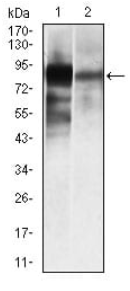
WB Predicted band size 57.3kDa
Host/Isotype Mouse IgG1
Species Reactivity Human,Mouse,Rat,Rabbit
Immunogen Purified recombinant fragment of human ALPL expressed in E. Coli.
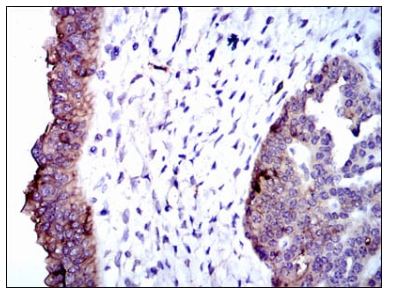
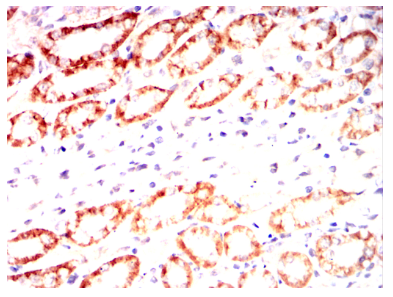
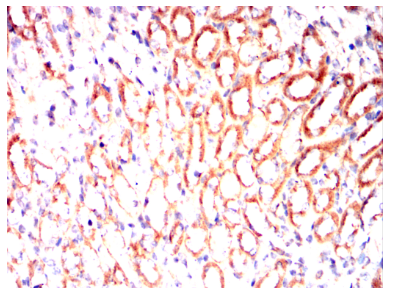
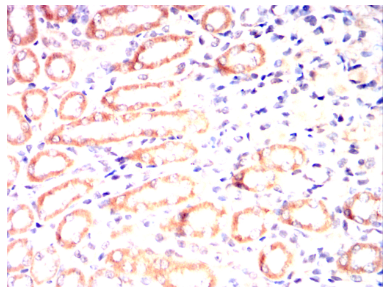




 WeChat
